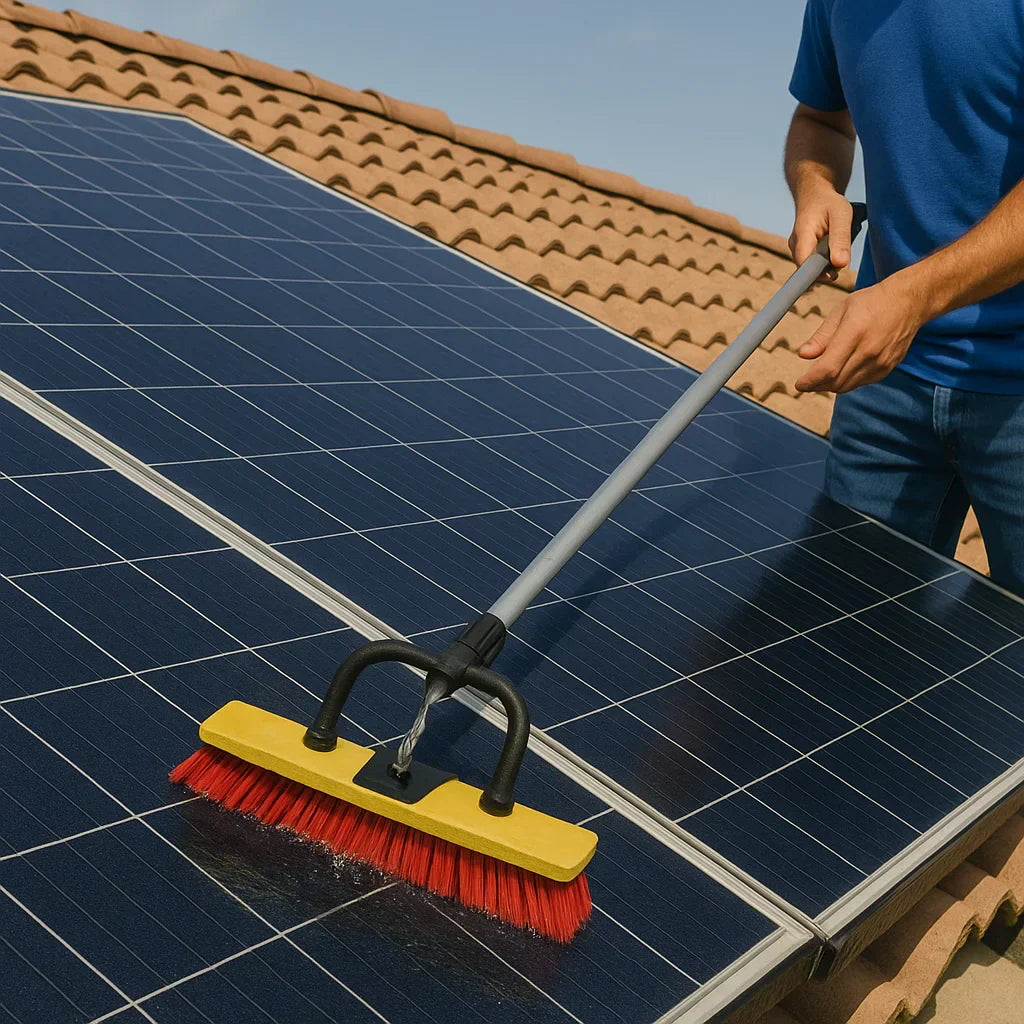


If you ask five solar owners how often panels should be cleaned, you will probably get five different answers.
Some people clean their panels every month. Others wait until they can see a layer of dirt from the ground. Plenty of homeowners assume rain takes care of everything.
The honest answer is that there is no single cleaning schedule that works for every solar system. How often your panels need attention depends on where you live, what collects on your roof and how quickly that buildup affects production.
For many homeowners, checking the panels monthly and cleaning them every three to six months is a reasonable place to start. Homes in dusty, dry or agricultural areas may benefit from more frequent cleaning. Homes in areas with regular rainfall and less airborne debris may need it less often.
The important thing is not following a calendar blindly. It is understanding what is happening on your own roof.
Why Solar Panels Get Dirty
Solar panels spend every day exposed to the outdoors. Even when they do not look especially dirty from the ground, their surface can collect:
Dust
Pollen
Bird droppings
Ash and smoke residue
Sand
Leaves and tree debris
Air pollution
Mineral deposits from water
The amount and type of buildup varies throughout the year. Pollen may be the biggest problem during spring, while dust and wildfire ash may become more noticeable during the warmer months.
Homes near busy roads, open fields, construction, farms, deserts or the coast often experience faster accumulation than homes in cleaner, wetter environments.
Does Dirt Really Affect Solar Panel Production?
Yes, although the amount varies considerably.
Solar panels produce electricity when sunlight reaches the solar cells beneath the glass. Dirt and debris can reduce the amount of sunlight passing through that surface.
The International Energy Agency’s Photovoltaic Power Systems Programme identifies soiling as one of the leading causes of solar system underperformance worldwide. Its research estimates average global energy losses from soiling in the range of approximately 4 to 7 percent, although actual losses can be much higher in certain locations and conditions.
That does not mean every dirty solar system is losing the same amount of power. A light, even layer of dust may cause a modest decline. Heavy dirt, bird droppings or debris covering part of a panel can create a much more noticeable problem.
Panel angle also matters. Steeper panels usually shed water and loose debris more easily. Panels installed at a shallow angle tend to hold dirt longer, especially along the lower edge.
Is Rain Enough to Clean Solar Panels?
Rain helps, but it is not the same as a proper cleaning.
Think about what happens to a car that sits outside during a rainstorm. Loose dust may rinse away, but the car is rarely clean afterward. Pollen, bird droppings and stuck dirt often remain. Rain can also move dirt toward the bottom of a solar panel, where it collects near the frame.
Light rain may make the problem worse by combining dust and pollen into a thin film. Once that film dries, it can become harder to remove.
A strong storm can certainly improve the appearance of panels, but relying entirely on rain means you have little control over when or how well they are cleaned. This is especially important during long dry periods, when solar production is often at its highest and natural rainfall is limited.
A Practical Solar Panel Cleaning Schedule
There is no universal rule, but these guidelines can help you find a reasonable starting point.
Every three to six months
This can work well for homes in dry or dusty climates, areas with seasonal pollen, properties near open land and homes that receive very little rain.
Every six to twelve months
This may be enough in areas with regular rainfall, cleaner air and panels installed at a steeper angle. Production should still be monitored between cleanings.
After unusual weather or environmental events
It is worth checking your panels after dust storms, nearby construction, wildfires, heavy pollen, high winds or long periods without rain.
More frequent light rinsing
A short, regular rinse can help prevent loose dirt from building into a heavier layer. This is where a permanently installed solar panel cleaning system can make routine maintenance much easier. Instead of waiting several months and dealing with stubborn buildup, homeowners can rinse panels regularly from the ground or on an automated schedule.
Signs Your Solar Panels May Need Cleaning
You do not always need to climb onto the roof to know something has changed.
Watch for a gradual decline in energy production that cannot be explained by cloudy weather, shorter days or shading. Most solar monitoring apps allow you to compare production over time.
Other signs include visible dust, streaks, bird droppings or debris along the lower edge of the panels.
Try comparing similar clear days instead of comparing one day to the next. If production is consistently lower than it was under similar conditions, dirt may be part of the problem. It is also possible that the system has an equipment issue, so a major or sudden decline should be investigated rather than automatically blamed on dirty panels.
When Is the Best Time to Clean Solar Panels?
Solar panels should be cleaned when the surface is cool, usually early in the morning or later in the evening.
Putting cold water on extremely hot glass may create unnecessary thermal stress. Water also evaporates more quickly in direct midday sun, which can leave behind mineral spots and make the cleaning process less effective.
Cooler conditions give the water more time to loosen and carry away dirt.
Can You Clean Solar Panels With Tap Water?
In many areas, tap water can be used for routine rinsing. However, water quality matters.
Hard water contains dissolved minerals that may leave spots when the water evaporates. The risk is greater when panels are rinsed during the hottest part of the day or when large amounts of water are allowed to dry on the glass.
Using a short cleaning cycle during cooler hours can help reduce spotting. Homes with extremely hard water may benefit from filtration or water treatment, particularly when panels are cleaned frequently.
Harsh chemicals, abrasive tools and high pressure washing should generally be avoided. Solar panels are durable, but their glass, seals, wiring and protective coatings should still be treated carefully. Always review the panel manufacturer’s cleaning instructions before choosing a method.
The Problem With Waiting Until Panels Look Dirty
By the time a layer of dirt is obvious from the ground, it may have been accumulating for weeks or months.
The traditional approach is to wait until the panels are visibly dirty and then schedule a major cleaning. That can work, but it often means living with a gradual production decline between cleanings. It may also require someone to climb onto the roof or hire a professional several times over the life of the system.
Regular light cleaning takes a different approach. The goal is to remove loose dust and debris before it becomes a stubborn layer.
It is similar to maintaining almost anything else around a home. Smaller, consistent maintenance is usually easier than waiting for the problem to become severe.
A Safer Way to Keep Solar Panels Clean
Solar panels are often installed on steep, difficult to reach sections of a roof. Climbing up with a hose, brush or bucket introduces a risk that many homeowners should not take.
Solar Spray Pro systems are permanently mounted and operated from the ground, allowing homeowners to rinse their panels without repeatedly climbing onto the roof.
The DIY Starter System provides a simple and affordable option for homeowners who want direct control over cleaning. The Home Elite System adds automated scheduling for homeowners who want routine cleaning handled for them.
These systems are designed for short, efficient cleaning cycles using water only. Regular rinsing helps prevent everyday dust, pollen and debris from building up between deeper cleanings.
So, How Often Should You Clean Your Solar Panels?
For most homeowners, every three to six months is a sensible starting point for a traditional cleaning schedule. Your panels may need attention more often if you live in a dry, dusty or high pollen area.
A better answer, however, is to watch your system and adjust based on actual conditions. Check production, look for visible buildup and pay attention to weather events that may leave dirt or debris behind.
If cleaning requires climbing onto the roof or arranging a service appointment every time, it will probably happen less often than it should. Making the process quick, safe and convenient is what turns solar panel cleaning from an occasional project into routine maintenance.
Not sure how much dirty panels could be costing your system? Request a free custom Solar ROI report to estimate your potential production and the value of keeping your panels cleaner.